
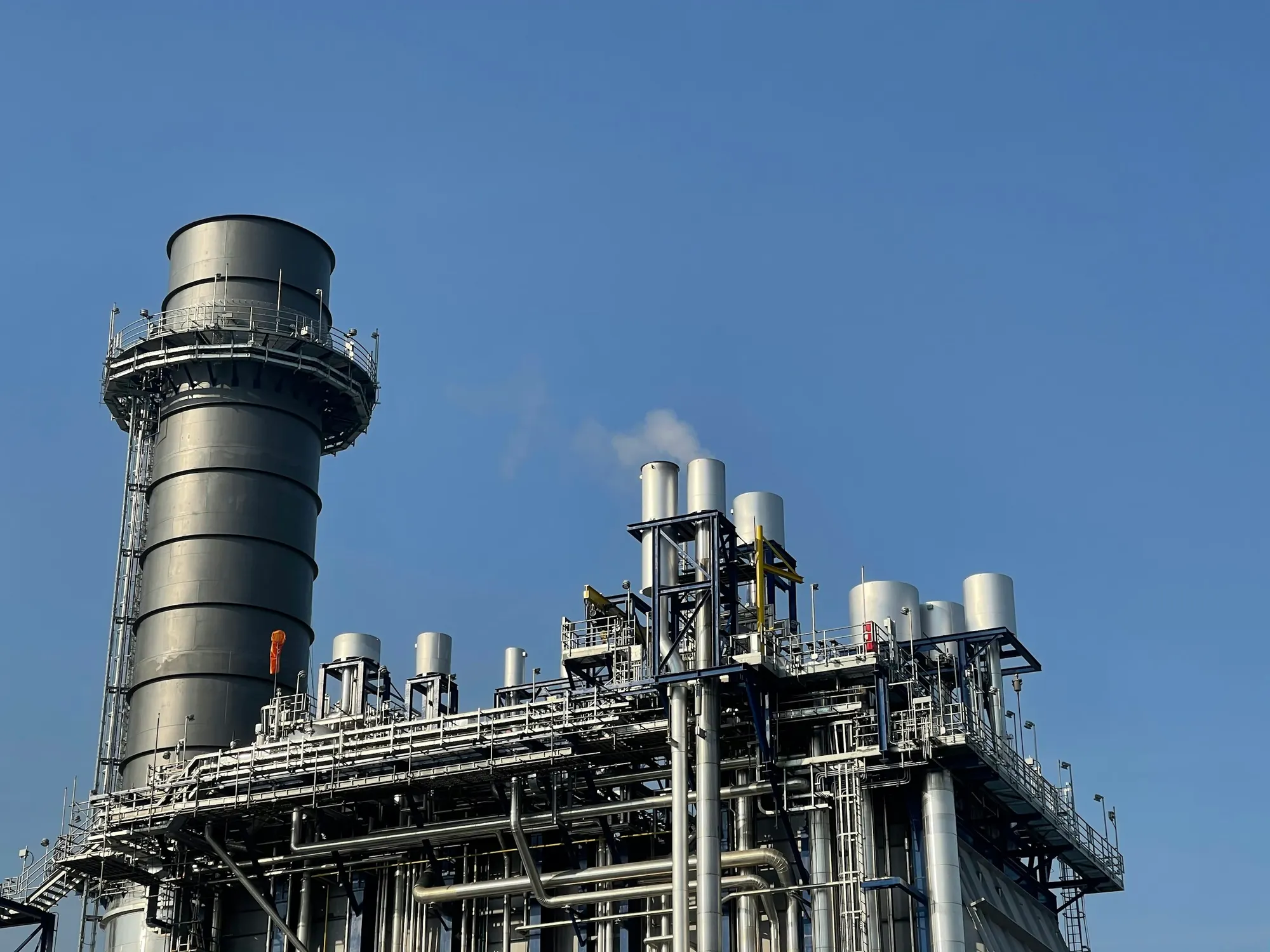
Gas Turbine Air Inlet Filters
Every stage of the inlet house, from weather-hood coalescers to E12 final filters. Matched to your turbine, your site conditions, and your outage window.
Clean air in,
megawatts out
A gas turbine breathes enormous volumes of air. Dust, salt, and hydrocarbon aerosols that get past the filters coat the compressor blades, which cuts airflow, output, and efficiency.
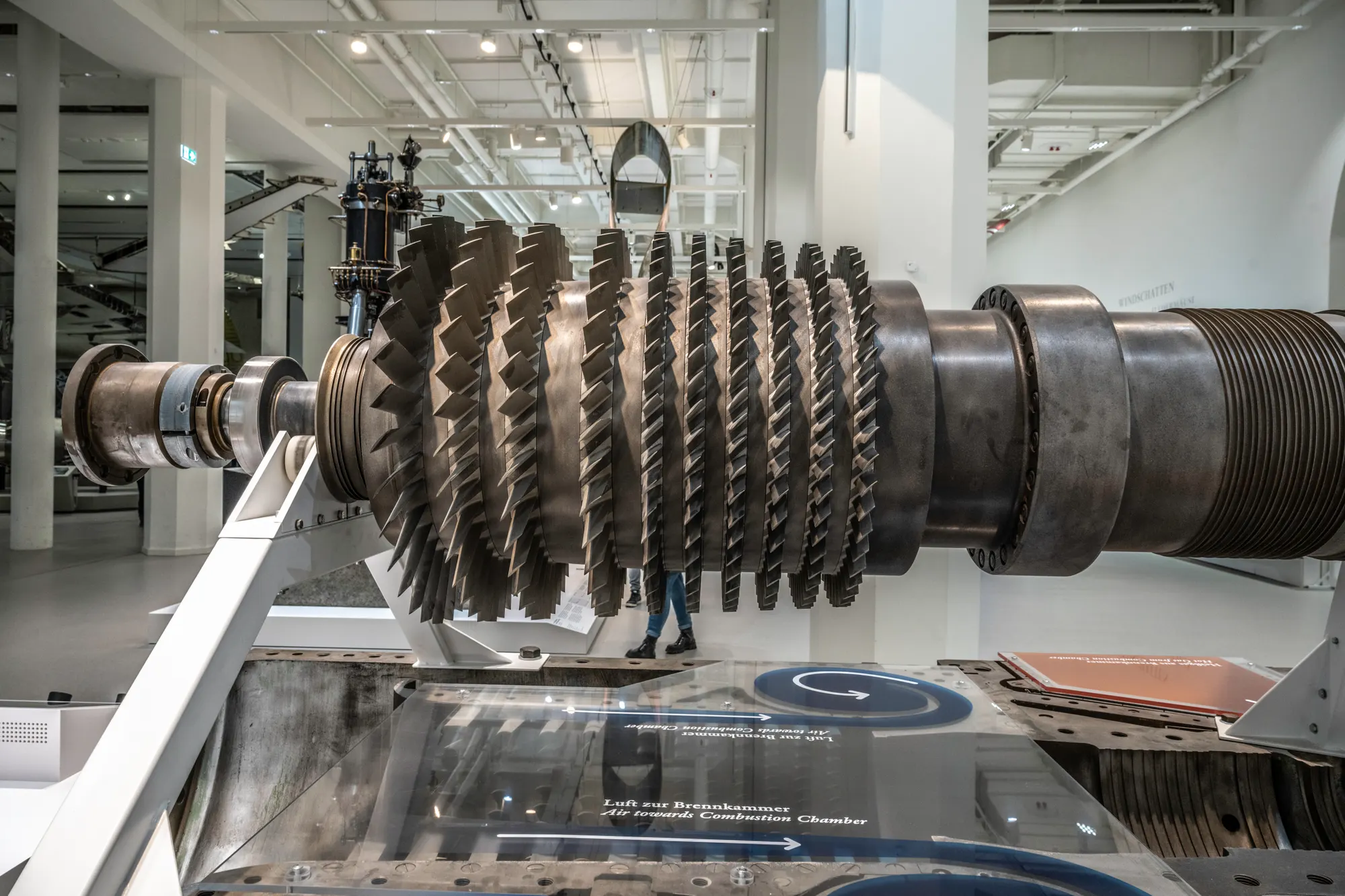
- Protect output and heat rate. Less compressor fouling means less lost capacity and less fuel per MWh.
- Fewer offline water washes. High-efficiency final stages keep compressors cleaner between outages.
- Lower pressure drop. As a rule of thumb, each inch of water column of inlet loss costs roughly 0.4–0.5% of output.
- Stop water and salt. Hydrophobic media and coalescers protect against corrosion at coastal and humid sites.
Multi stages, one vendor
Click through the inlet house to see where each filter type sits and what it does.
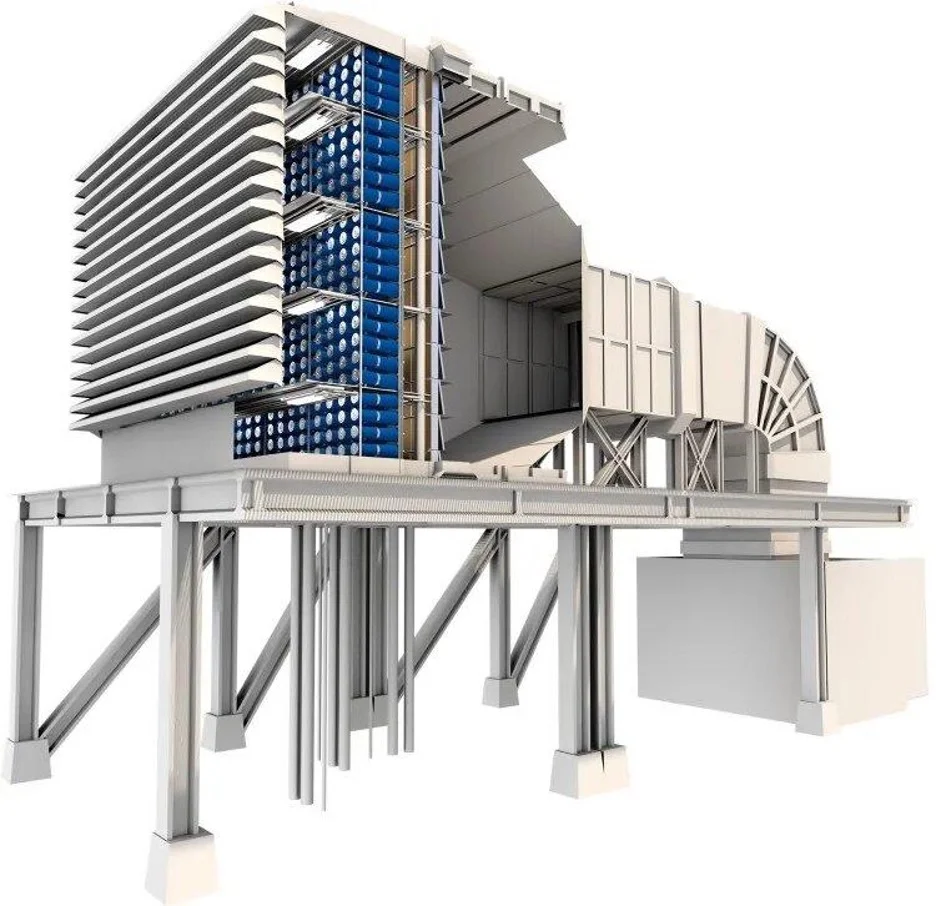
Weather Hoods
The first barrier against rain, snow, birds, and debris. Hoods slow the incoming air so droplets fall out before reaching the filters.
- Screens
- Drainage
- Anti-icing
Coalescers
Pads and vane separators merge fog and sea spray into droplets that drain away, keeping salt-laden water off the main filters.
- Coastal
- Offshore
- Humid sites
Prefilters
Panels and pockets catch coarse dust, insects, and pollen. This protects the expensive final stage and extends its life by years.
- G4–F7
- MERV 8–13
- Pockets & panels
Pulse / Static Main Stage
Cone-and-cylinder pulse cartridges clean themselves with reverse air bursts, while static V-cells deliver high efficiency at low pressure drop.
- F8–F9
- Nanofiber
- Self-cleaning
EPA / HEPA Final
E10–E12 final filtration stops fine particles and salts, so compressors stay clean and offline water washes become rare.
- E12 ≥ 99.5%
- Hydrophobic
- Water-tight
Evaporative Cooler
Wetted media cools the inlet air on hot days, restoring output. Drift eliminators catch water carry-over.
- Hot-day output
- Drift eliminators
Filters for every stage of the inlet house
We supply OEM and premium-equivalent replacement elements, cross-referenced to your existing part numbers and housing.
Pulse (Self-Cleaning) Cartridges
Cone-and-cylinder pairs and cylindrical cartridges for pulse-jet inlet houses. Reverse air pulses knock dust off the media so the elements keep working through sandstorms, pollen seasons, and snow.
- Cellulose blend, synthetic, nanofiber, and membrane media
- F8–F9 up to E10–E12 efficiency
- Open, closed, twist-lock, and flange-top end caps
Static Cartridges & Panels
Barrier filters that run to a set pressure drop and are then replaced. A good fit for temperate, coastal, and offshore sites with moderate dust loads.
- Static cylindrical and conical cartridges
- V-panels and Z-panels
- F7–F9 intermediate, E10–E12 final
Prefilters: Panels & Pockets
The first line of particle defense. They catch coarse dust, insects, and fibers, which protects your expensive final stage and extends its life.
- Pleated and synthetic pad panels
- Welded, tear-resistant pocket filters
- G4–F7 (about MERV 8–13)
V-Cell / Compact High-Efficiency
Deep-pleated V-bank filters in a standard 592 × 592 mm (24 × 24 in) face. They pack a large media area into a low-pressure-drop package for static houses.
- 3V and 4V multi-bank configurations
- 292 mm and 440–600 mm depths
- F7–F9 through E12
EPA / HEPA Final Stage
E10–E12 final filtration stops fine dust, salt, and hydrocarbon aerosols. Compressors stay clean, so operators can cut back offline water washes.
- E10 ≥85%, E11 ≥95%, E12 ≥99.5% (EN 1822 / ISO 29463)
- Hydrophobic, water-tight construction
- Single-stage membrane or multi-stage static
Coalescers & Moisture Separators
Coalescing pads and vane separators take out fog, mist, sea spray, and rain before water can reach the main filters and carry dissolved salts downstream.
- Glass-fiber and synthetic coalescing pads
- Vane (chevron) separators
- For coastal, offshore, and humid sites
Evaporative Cooler Media
Cross-fluted cellulose and glass-fiber cooler pads restore hot-day output. We replace scaled or collapsed media and inspect drift eliminators while we are on site.
- Typically 12 in (300 mm) deep or more
- Modular blocks stacked to duct size
- Paired with drift eliminator service
Weather Hoods & Inlet Hardware
Hood screen replacement, coalescer pad change-outs, gasket kits, and corrosion repair. These are the parts of the inlet house that everyone forgets until they fail.
- Bird and insect screens
- Gaskets, clamps, and yokes
- Inspection and repair
Matched to your site, not a catalog
The right filter depends on what your air carries. Before we quote, we look at your environment, operating profile, and current pressure-drop history.
Efficiency classes at a glance
| EN 779 / EN 1822 | ISO 16890 | ASHRAE 52.2 | Typical use |
|---|---|---|---|
| G4 | ISO Coarse ~60–70% | MERV 7–8 | Coarse prefilter |
| M6 | ePM2.5 ~50–65% | MERV 11–12 | Prefilter / intermediate |
| F7 | ePM1 ~50–70% | MERV 13 | Intermediate stage |
| F8 | ePM1 ~70–80% | MERV 14 | Main stage |
| F9 | ePM1 ≥80% | MERV 15–16 | Main stage |
| E10 / E11 / E12 | Beyond ISO 16890 | Beyond MERV | EPA final stage |
Conversions are approximate because the test methods differ. Turbine intake filters are tested to ISO 29461-1. We confirm ratings against the datasheet for each part number.
Replacement filters for the turbines you run
Send us the end-cap style, dimensions, gasket type, or simply the label on your current element. We cross-reference filters for inlet houses serving major turbine platforms, including:
- GE Vernova
- Siemens Energy
- Mitsubishi Power
- Solar Turbines
- Baker Hughes
- Ansaldo Energia
- Kawasaki
- MAN Energy Solutions
Turbine manufacturer names identify compatibility only and do not imply endorsement.
Planning an inlet filter change-out?
We supply the elements and handle the full job, from removal and installation to disposal of the spent filters, so your outage stays on schedule.